


Every leadership team I talk to is asking the same question: How do we get our people using AI?
Most conversations start with technology. Which platform should we use? What policies do we need? How do we govern it?
Those questions matter. But they are not the hardest part.
The harder part is helping people build the confidence and judgment to use AI effectively to improve their work.
At Red Caffeine, we believe growth happens at the intersection of strategy, creativity, technology, and execution. AI is becoming an important part of that equation, but it is not the equation itself. Its value still depends on the people using it.
That belief shaped one of the most meaningful things we have done as a company this year.
Every year, our team develops Red Caffeine’s annual company theme. This year, we added one requirement: everyone had to use AI as part of the process.
But we did not ask people to simply present a polished idea. We asked them to show their work.
What prompts did they use? What tools did they try? How did their thinking change? Where did AI help? Where did it miss the mark? Where did human judgment make the final call?
The result was more valuable than the winning theme.
Some people used AI as a brainstorming partner. Others used it to challenge assumptions, refine language, compare ideas, or explore visual directions. No two workflows looked the same, which was exactly the point.
A strategist, designer, content marketer, project manager, and developer are not going to use AI the same way. They solve different problems. They need different starting points.
The goal is not to standardize creativity. It is to give people enough structure to experiment and enough room to make the tool useful in their own work.
The contest reinforced something I believe strongly: AI is great at creating possibilities. People are still responsible for deciding which possibilities are worth pursuing.
Across the presentations, our team rewrote, combined, challenged, refined, and sometimes discarded AI-generated ideas. They pushed back on language that did not sound like Red Caffeine. They rejected visuals that felt generic. They kept shaping the work until it met our standards.
AI helped accelerate the exploration. Human judgment made the work better.
That distinction matters.
The advantage will not come from simply having access to the newest tool. It will come from asking better questions, applying better judgment, and using technology to solve real business problems.
When the presentations were complete, the full company voted on the winning theme.
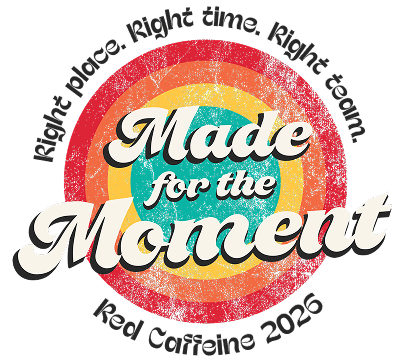
The concept that resonated most, developed by Content Marketer Christina Buettner, was Made for the Moment.
The phrase captured more than our approach to AI. It captured where we are as a company.
We are all operating in a period of constant change. AI is moving fast. Buyer expectations are changing. Teams are being asked to do more with less. Leaders need better visibility, better decisions, and better ways to turn strategy into action.
Organizations do not become ready for that environment by chasing every new tool. They become ready by building adaptable teams, stronger processes, and the ability to connect new technology to practical outcomes.
That is what Made for the Moment means to us.
It is a reminder that growth does not come from technology alone. It comes from people who are curious enough to learn, disciplined enough to apply what they learn, and thoughtful enough to know when the human part matters most.
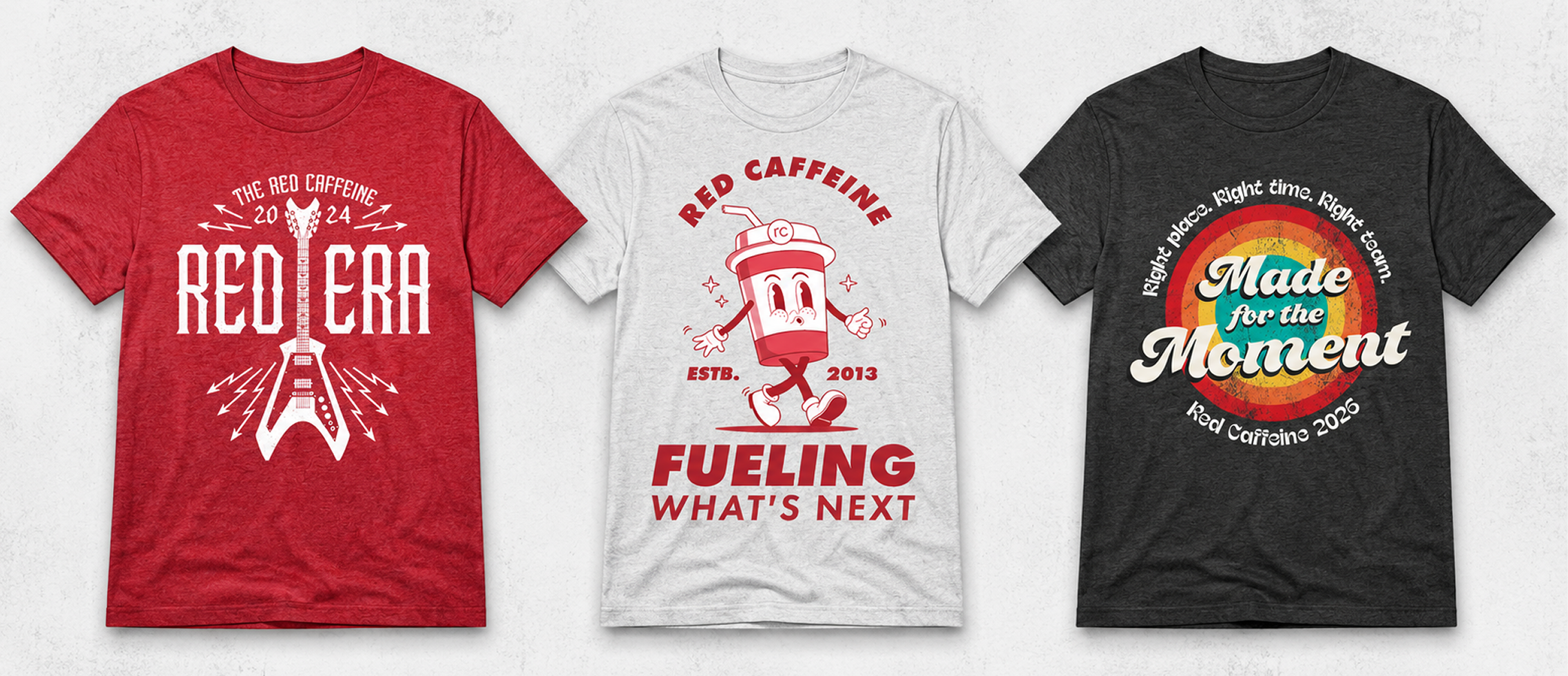
Last month, we distributed Made for the Moment T-shirts to our full team, and they are already wearing them with pride.
But the real value is not the shirt or the slogan. It is the culture behind it.
A culture where people are willing to try something new. Where they share their work. Where they learn from each other. And where technology strengthens strategy, creativity, and execution rather than replacing them.
We did not hand people an AI playbook.
We gave them a reason to experiment. And that may be the most important starting point for any AI-ready organization.
Because the future will not belong to the companies with the most AI.
It will belong to the companies whose people are best equipped to use it.





Join Thousands Of
Like-Minded Folks
Receive monthly business growth tips
and event invites right to your inbox.


