


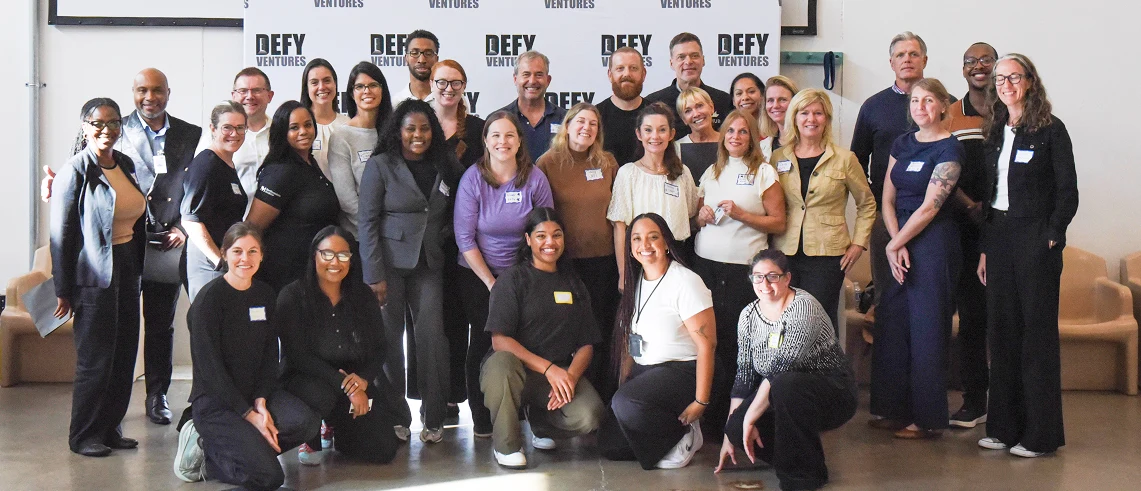
The energy was electric from the moment we walked into the Kewanee Life Skills Reentry Center.
I was there with Defy Ventures for a Business Pitch Competition and Graduation honoring Entrepreneurs in Training, or EITs, who had completed Defy’s CEO of Your New Life program.
I have judged many pitch competitions throughout my career, but this experience was unlike any other. The day was awe-inspiring, emotional, and deeply hopeful. It reminded me that before we can build a business or change the direction of our lives, we first need to envision something different.
Change Starts with a Vision
Visioning can sound abstract, but I believe it is one of the most practical tools we have.
A clear vision asks us to get specific about the future we want to create. What kind of life do I want to live? What do I want to contribute? Who do I want to become? What kind of business could support that life and create value for other people?
Without that picture, it is easy to become distracted, discouraged, or pulled back toward familiar patterns. When circumstances get difficult and shortcuts are tempting, a meaningful vision can serve as a north star. It gives us a reason to stay focused and a way to evaluate our choices.
This is just as true for an established CEO navigating a difficult market as it is for a first-time entrepreneur starting over.
The EITs were not simply developing business concepts. Through the CEO of Your New Life program, they were doing the much harder work of imagining a purposeful life beyond incarceration and creating a plan to move toward it.
Building Trust and Moving Beyond Bias
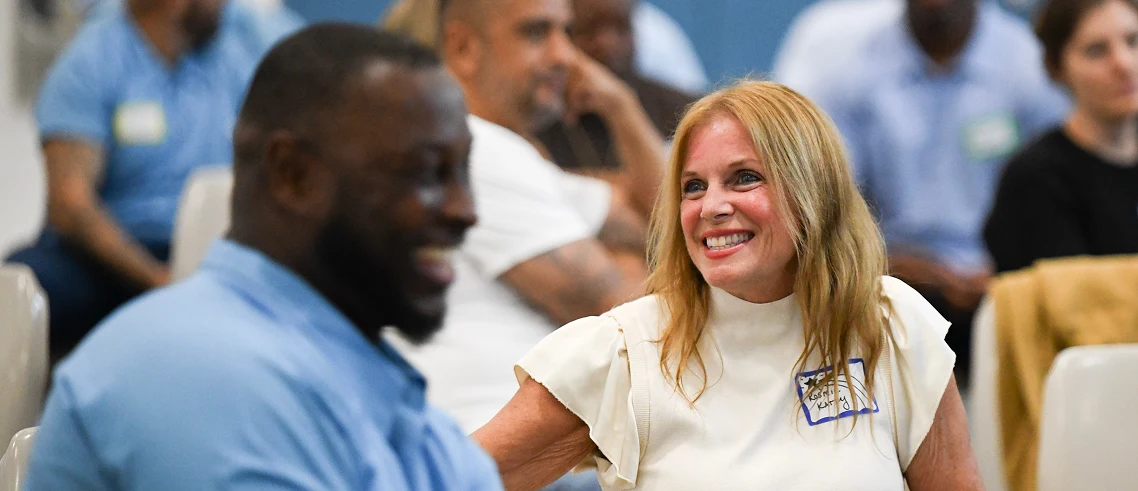
Before we discussed markets, startup costs, or customer acquisition, we participated in trust-building exercises designed to help everyone connect as people.
Those exercises mattered.
It would have been easy to enter the facility focused on the most obvious difference between us. The EITs were on the inside, and the volunteers were from the outside. But the activities helped us move beyond labels, assumptions, and bias.
As we talked, we began to recognize how much we shared. We had all faced setbacks, questioned our abilities, worried about our families, made mistakes, and struggled to determine what should come next. We also experienced opportunities, discovered strengths we didn’t know we had, and benefited from people who saw potential in us.
Our circumstances were different, but many of the human challenges were the same.
That realization changed the room’s dynamic. We were not experts arriving with all the answers for people who had none. We were people learning from one another, sharing our experiences, and trying to strengthen good ideas.
Trust made honest feedback possible. I believe it also made the celebration that followed feel even more meaningful.
Building Businesses Without the Tools We Take for Granted
The EITs presented business ideas they had developed while incarcerated. That context is important.
Entrepreneurs on the outside can research competitors, compare prices, study market trends, survey prospective customers, or ask an AI tool to challenge an assumption. The EITs had little or no internet access and limited opportunities to conduct outside research. They often had to rely on books, magazines, correspondence with family members, and the resources provided through the program.
Despite those limitations, their pitches were thoughtful, well-researched, and remarkably well articulated. They understood the problems they wanted to solve, the customers they hoped to serve, and the experience and skills they could bring to their businesses.
As judges, we were asked to consider many of the same questions we ask business leaders at Red Caffeine:
- Is the customer problem clear?
- Does the proposed solution address a real need?
- Can the founder realistically execute the idea?
- How will the business attract its first customers?
- Can it begin generating revenue relatively quickly?
- Is the idea financially feasible?
- Could it eventually grow beyond its founder?
These questions are not meant to discourage an entrepreneur. They help transform an exciting idea into a viable one.
The most valuable feedback is not simply, “I like your idea.” It is an honest and respectful examination of the assumptions behind it. What evidence supports the opportunity? What could prevent it from succeeding? What needs to be learned, tested, or adjusted before investing time and money?
That kind of validation is central to our work at Red Caffeine. Whether we are helping a company evaluate a new market, launch a product, refine its positioning, or determine its best growth path, our goal is to replace guesswork with insight.
At Kewanee, those conversations took place within a pitch competition, but the work felt very familiar. Listen carefully. Test the logic. Ask constructive questions. Help someone see both the opportunity and the risks more clearly. It is the work I love to do most.
Seeing That Tthere is a Life Beyond Prison (or Incarceration)
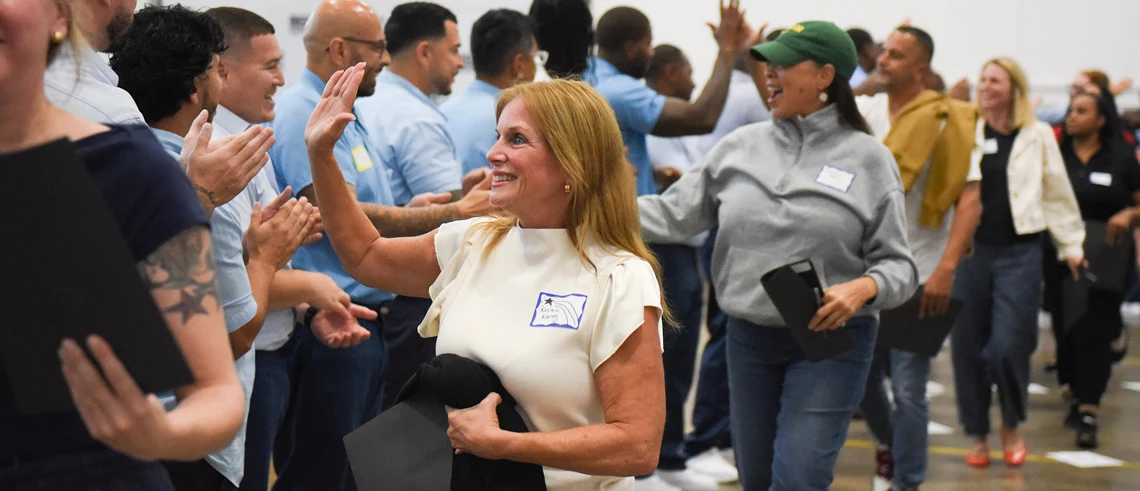
Some of the most powerful participants that day were former Defy graduates who returned to the facility.
Their presence made the idea of “life beyond” feel real.
They were not a theoretical possibility described in a workbook. They were living proof that a person can come home, make different choices, build stability, and continue moving toward a purposeful life.
When the future feels unrealistic or uncertain, seeing someone who has already traveled a similar path can change what feels possible. The former graduates brought credibility that no curriculum or volunteer could provide. They understood the challenges of reentry because they had experienced them.
They didn’t promise the path would be easy. They were showing that there is a path.
A Graduation That Meant Something Different
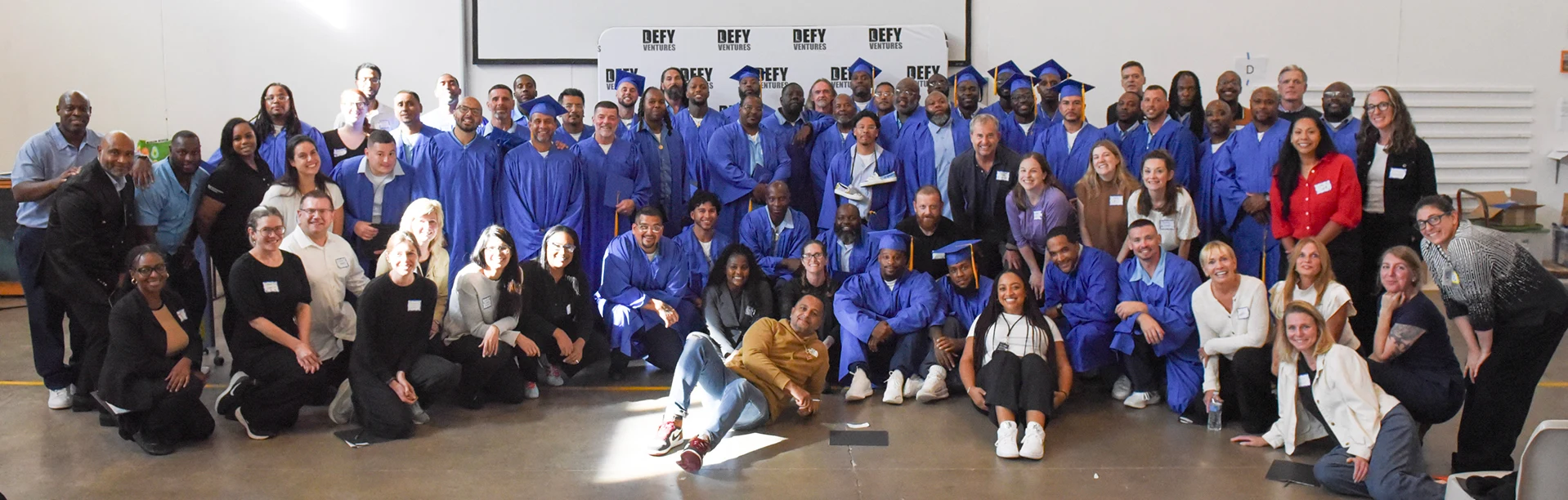
As memorable as the pitches were, the graduation ceremony affected me even more deeply.
For some of the graduates, this was the first real success they had ever celebrated. Watching them take in that achievement, along with the joy it brought their family members who were able to attend, was incredibly moving.
The sense of accomplishment was visible on their faces. It was not about having a perfect business plan or delivering a flawless presentation. It came from completing something difficult, standing before business leaders, volunteers, peers, and loved ones, and having their effort recognized. In that moment, they were being seen not only for what they had achieved, but also for what they could become.
The ceremony did not minimize anyone’s past. It acknowledged that the past does not have to define every future possibility.
The People Who Made the Day Possible
Melissa O’Dell, Executive Director of Defy Ventures Illinois, brought extraordinary energy to the experience. Her belief in the EITs was unmistakable. She created an environment that felt welcoming, honest, respectful, and full of possibility. Her energy set the tone for the entire day.
I also want to recognize my friend Kristi Zuhlke, a fellow entrepreneur and chair of the Defy Illinois Advisory Board. Kristi inspired me to volunteer. Her commitment to the Defy mission and her belief that entrepreneurship can help people imagine and build a different future made me want to experience the program for myself. I am grateful she encouraged me to take part.
I also appreciated the chance to connect with business and community leaders who contributed their time and expertise, challenged their own assumptions, and invested in others’ potential.
There was something powerful about seeing people from different industries and backgrounds come together around a shared belief. Talent exists everywhere, but opportunity and access do not. I left knowing this would not be a one-time experience, and I look forward to participating in future Defy events.
The Power of Showing Up
Before the event, Defy told volunteers that some EITs hadn’t received a visitor in a long time. That stayed with me.
As business leaders, we sometimes underestimate the value of simply showing up. We assume our contribution must be a brilliant insight, an important introduction, or a major financial commitment. Those things can certainly matter. But attention matters too. Encouragement matters. Taking someone’s idea seriously enough to ask a thoughtful question matters.
I went to Kewanee expecting to contribute my business experience. I left with a renewed appreciation for resourcefulness, preparation, courage, and the power of a clearly imagined future.
Hope Is Practical
What made the experience so hopeful was that hope didn’t feel abstract.
It looked like completing the coursework. It looked like doing hours of homework every week. It looked like practicing a three-minute pitch until it was clear and confident. It looked like receiving candid feedback without becoming defensive. It looked like former graduates returning to show others what could come next. It looked like a family member celebrating an accomplishment that might once have seemed impossible.
Most of all, it looked like people giving themselves permission to envision a different future and then doing the difficult work required to move toward it.
Entrepreneurship is not the only path to a successful new life, and not every concept will become a business. But learning to articulate a vision, evaluate an opportunity, accept feedback, revise a plan, and stay focused on a meaningful goal creates skills that extend far beyond a pitch competition.
I have judged many pitches, but this one was special because the stakes were about more than winning. Each presentation represented someone practicing the ability to design a different life and asking other people to see that possibility with them.
I am grateful to the EITs who trusted us with their ideas and aspirations. I am grateful to the families who celebrated their accomplishments, the graduates who returned to demonstrate that there is a life beyond, Melissa and the Defy team for creating such a transformative experience, and the leaders who showed up ready to listen, encourage, and learn.
I left Kewanee reminded that meaningful change often begins with a vision. It starts with a clear and purposeful picture of what life could become. That vision doesn’t eliminate obstacles, but it gives us a reason to keep going when the path gets hard.
Sometimes, having another person believe in that vision helps us believe in it too.
To learn more, explore Defy’s volunteer opportunities.


If You Enjoyed This Article, Read These Next.



Join Thousands Of
Like-Minded Folks
Receive monthly business growth tips
and event invites right to your inbox.


